Description
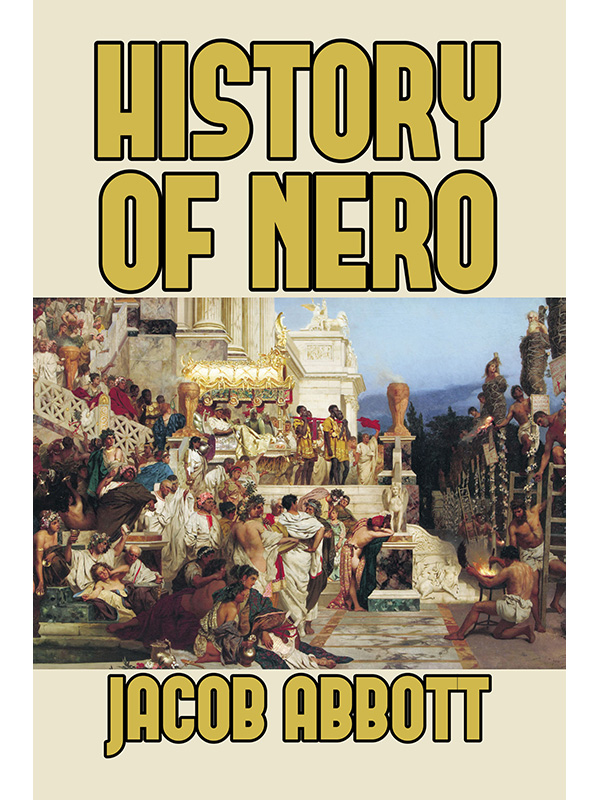
By Jacob Abbott. Step into the dangerous and dramatic world of imperial Rome in this classic account of one of history’s most infamous rulers.
In History of Nero, renowned nineteenth-century historian Jacob Abbott explores the turbulent life and reign of Nero, the controversial emperor whose name has become synonymous with tyranny, extravagance, and the decline of the early Roman Empire. Combining vivid storytelling with historical narrative, Abbott brings to life the intrigues, rivalries, conspiracies, and disasters that surrounded Nero’s rise and fall.
From Nero’s early years under the influence of his ambitious mother, Agrippina, to the political struggles of the imperial court, the book traces the transformation of a young ruler into one of antiquity’s most notorious emperors. Readers will encounter the splendor and corruption of imperial Rome, the Great Fire that devastated the city, the growing unrest within the empire, and the dramatic events that ultimately led to Nero’s downfall.
Abbott’s engaging and accessible style makes the complexities of Roman history understandable and compelling for modern readers. Rather than presenting Nero merely as a villainous caricature, the book explores the political pressures, personal ambitions, and turbulent environment that shaped his reign, offering a fuller picture of the man behind the legend.
This carefully restored reprint revives a beloved historical classic for a new generation. Ideal for students, lovers of Roman history, and readers fascinated by the personalities of the ancient world, History of Nero remains a captivating introduction to the life of the emperor whose reign marked one of the most dramatic chapters in the history of ancient Rome.
About the author: Jacob Abbott (1803–1879) was a native of the state of Maine who was a professor of mathematics and natural philosophy, a minister, and founder of two schools (the Mount Vernon School for Young Ladies in Boston and the Mount Vernon School for Boys, in New York City). He wrote more than 180 books and became famous for his easy-to-read style of historical storytelling, stripped of the dry dustiness which characterized other texts.
Contents
Chapter I: Nero’s Mother
Chapter II: The Assassination of Caligula
Chapter III: The Accession of Claudius
Chapter IV: The Fate of Messalina
Chapter V: The Childhood of Nero
Chapter VI: Nero an Emperor
Chapter VII: Britannicus
Chapter VIII: The Fate of Agrippina
Chapter IX: Extreme Depravity
Chapter X: Piso’s Conspiracy
Chapter XI: The Fate of the Conspirators
Chapter XII: The Expedition into Greece
Chapter XIII: Nero’s End