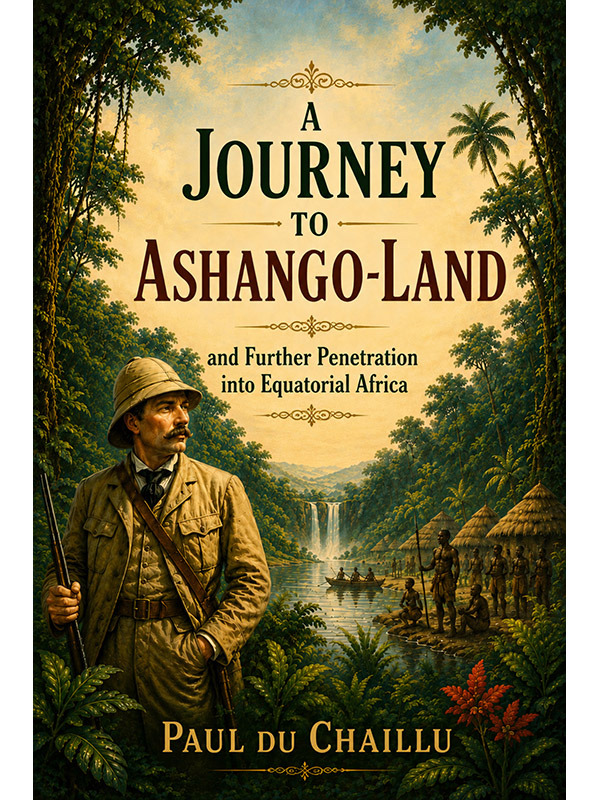
A Journey to Ashango-land, and Further Penetration into Equatorial Africa

By Paul B. du Chaillu. Venture into the remote and little-known interior of nineteenth-century Central Africa in this remarkable narrative of exploration, endurance, and discovery by one of the Victorian era’s most celebrated adventurers.

In A Journey to Ashango-land, and Further Penetration into Equatorial Africa, famed explorer Paul du Chaillu recounts his daring travels through the forests, rivers, and isolated territories of equatorial Africa during a period when vast regions of the continent remained largely unknown to Western audiences. Combining adventure, natural history, and firsthand observation, this classic work captures the excitement and dangers of African exploration at the height of the nineteenth century.

* This new edition includes a new introduction, an author biography, and digitally restored illustrations reproduced from the earliest available editions.

Description

By Paul B. du Chaillu. Venture into the remote and little-known interior of nineteenth-century Central Africa in this remarkable narrative of exploration, endurance, and discovery by one of the Victorian era’s most celebrated adventurers.

In A Journey to Ashango-land, and Further Penetration into Equatorial Africa, famed explorer Paul du Chaillu recounts his daring travels through the forests, rivers, and isolated territories of equatorial Africa during a period when vast regions of the continent remained largely unknown to Western audiences. Combining adventure, natural history, and firsthand observation, this classic work captures the excitement and dangers of African exploration at the height of the nineteenth century.

Traveling far beyond the familiar coastal regions, du Chaillu journeyed into Ashango-land and neighboring territories inhabited by a variety of Central African peoples. Along the way he encountered dense tropical forests, unfamiliar wildlife, difficult terrain, dangerous illnesses, and the constant challenges of travel through remote wilderness. Readers accompany him on perilous expeditions filled with encounters with elephants, gorillas, crocodiles, and other remarkable creatures of the African interior.

The narrative also offers detailed observations of local customs, village life, trade, hunting practices, and cultural traditions, providing modern readers with a valuable historical glimpse into Central Africa during an era of expanding exploration and scientific curiosity. Du Chaillu’s vivid descriptions and dramatic storytelling helped ignite widespread fascination with Africa among nineteenth-century readers.

Written in an engaging and highly readable style, the book stands as both an adventure narrative and an important historical document of exploration literature. It reflects the spirit of discovery that defined the Victorian age while preserving firsthand impressions of landscapes and societies undergoing profound historical change.

This carefully restored reprint revives a classic work of African exploration for modern audiences. Essential for readers interested in travel literature, African history, wildlife, and nineteenth-century adventure writing, it remains a fascinating journey into one of the least-known regions explored during the great age of exploration.

* This new edition includes a new introduction, an author biography, and digitally restored illustrations reproduced from the earliest available editions.

About the author: Paul Du Chaillu (1831?-1903) was a French-American explorer, zoologist, anthropologist, and travel writer best known for his pioneering expeditions into Equatorial Africa during the mid-nineteenth century. He became internationally famous after publishing vivid accounts of his travels among the forests and peoples of West and Central Africa, particularly for helping to confirm the existence of the gorilla to European and American audiences. Between 1855 and 1859, he traveled extensively through parts of present-day Gabon and neighboring territories, collecting animal specimens and documenting local societies. During these journeys he encountered gorillas, at that time still regarded by many in Europe as semi-legendary creatures known mainly from fragmentary reports and skeletal remains. His successful transport of gorilla specimens back to Europe and America brought him immediate fame. Du Chaillu spent much of his later life traveling between Europe, Russia, and the United States. He died in St. Petersburg, Russia, on April 29, 1903, reportedly following a stroke while engaged in research. He was buried at Woodlawn Cemetery in New York City. Though controversial during his lifetime, Paul Du Chaillu is today recognized as one of the important explorer-naturalists of the nineteenth century, whose writings helped shape Western understanding of Equatorial Africa and its wildlife.
Contents

CHAPTER I: The Voyage: Objects of the Journey.—Preparatory Studies.—Difficulties in Obtaining a Passage.—Departure from England.—Arrival off the Coast.—Miss the Mouth of the Fernand Vaz.—Return up the Coast.—Excitement of the Natives.—Old Acquaintances.—Changes in the Bar of the River.—Choice of a Settlement near Djombouai’s Village.—Bonfires and Rejoicings on the Riverbanks.—Commencement of Disembarkation.—Dangerous State of the Shore.—The Boat Upset in the Breakers.—Saved by the Negroes.—Loss of Instruments and Stores.

CHAPTER II: The Fernand Vaz: Outlines of the Coast Region.—The Ogobai.—Prairies of the Fernand Vaz.—The Commi Nation.—Distribution of the Clans.—Chief Ranpano and his Spells.—News of Arrival Sent to Quengueza, King of the Rembo.—Arrival of Quengueza.—His alarm at the Great Wealth I Had Brought Him.—A Pet Chimpanzee, and His Departure for England.—Visit to Elindé and the Mouth of the River.—My Illness.—Tenderness of Ranpano.—King Olenga-Yombi.—Grand Palaver of Commi Chiefs.—Permission Granted Me to Ascend the River into the Interior.—Visit to My Old Place and to Rinkimongani’s Grave.—Superstition of the Natives.—The Bola Ivoga.—Rabolo’s Fetich.—Departure of the Mentor for England.

CHAPTER III: Excursions in Search of the Gorilla and the Ipi: Visit to King Olenga-Yombi.—Storm on the Fernand Vaz.—Land Journey to Aniambié.—First Traces of Gorilla.—Form of Its Tracks.—Drunken Orgies of the King.—Magic Island of Nengué Ncoma.—Village of Nkongon Mboumba.—Search of the Ipi, or Great Pangolin.—Its Habits.—Village of Mburu Shara.—Nkengo Nschiego Variety of Chimpanzee.—Bowers of the Chimpanzee.—Group of Gorillas in a Plantain Grove.—Their Mode of Walking.—Horrid Form of Monomania.—Akondogo Brings a Live Gorilla.—Return to the Fernand Vaz.—Three More Live Gorillas.—Account of Their Capture.—Modification of Opinions Concerning the Gorilla.

CHAPTER IV: Start for the Interior: Arrival of a Fresh Supply of Scientific Instruments.—The First Steamer on the Fernand Vaz.—Preliminary Trip to Goumbi.—Astonishment of the Natives at the Fire-vessel.—Despatch Collections to England.—Live Gorilla Embarked for London.—His Habits in Confinement.—Narrow Escape of Drowning When Embarked.—Preparations Completed.—Last Look at the Sea.—Outfit.—Bodyguard of Commi Men.—Affecting Parting Scenes.—I Am Deceived by Olenga-Yombi.—The Renowned Doctor, Oune-jiou-e-niaré.—Arrival at Goumbi.—Observations to Fix Latitude and Altitude of Goumbi.—Quengueza’s Invocation of His Forefathers.—Disobedient Wives.—Excessive Drought.—Obindji.—Opposition of Bakalai.—Arrival of Ashira Porters.—Passage of the Hills to Olenda.

CHAPTER V: Visit to the Samba Nagoshi Falls: King Olenda, His Great Age.—Preparations for the Journey to the Falls.—We Cross the Ovigui.—Opangano Prairie.—Ndgewho Mountains.—Bakalai Village.—A Flock of Gorillas in the Forest.—The Louvendji River.—Dihaou and the Ashira-Kambas.—Navigate the Ngouyai River.—The Aviia Tribe.—Village of Mandji.—River Scenery.—Nkoumou Nabouali Mountains.—Nami Gemba.—Village of Luba.—The Spirit of the Falls.—Village Deity.—Arrival at Fougamou, the Principal Fall.—Legend of Fougamou.—Night Encampment.—Return to Dihaou.—We Sup on a Poisonous Serpent.—Forced March through Flooded Forest to Olenda.

CHAPTER VI: Ashira-Land: Grand Palaver to Discuss the Route into the Interior.—I am Forbidden to Pass through the Apingi Country.—Messengers Sent to the Chief of Otando.—Changes in Ashira Customs.—Decrease of Population.—The Potamogale Velox.—Its Habits.—My Former Description of This Animal.—Visit to Angouka.—Immense Plantation of Plantain-trees.—Quarrel with Mpoto, Nephew of Olenda.—Difficulties and Anxieties.—First Rumours of the Smallpox.

CHAPTER VII: The Plague in Ashira-Land: Breaking out of the Smallpox Epidemic.—Noble Conduct of Quengueza.—Departure of Quengueza’s People.—Illness of the Porters.—My Commi Bodyguard Refuse to Leave Me.—Departure of Part of the Baggage to Otando-land.—Quengueza Returns to Goumbi.—Letters from Europe.—Death of Mpoto.—Death of King Olenda.—His Burial.—Cemetery of the Ademba Chiefs.—Wailing for the Dead.—Death of Retonda.—Arrival of Messengers from Máyolo.—Distrust of the Natives.—Trickery of Arangui.—I am Robbed by the Ashira People.—Diminution of the Pestilence.—Quengueza’s Message to the People of Olenda.

CHAPTER VIII: From Olenda to Máyolo: Departure from Ashira-land.—Passage of the Ovigui.—Slave Village of King Olenda.—A Slave Chief.—Difficulties with the Porters.—More Robberies.—Illness of Macondai.—Leave Him Behind.—The Otando Range of Hills.—Picturesque Cascade in the Forest.—Cross the Louvendji.—More Difficulties with the Porters.—Hunger in the Forest.—Men Sent to Máyolo for Relief.—A Night in the Forest.—Myth of Atungulu Shimba.—Koola Nut-trees.—Search for Food.—Meet with a Gorilla.—A Hungry Night.—Unselfish Act of the Ashira.—Help Arrives from Máyolo.—Mpegui Nuts.—Arrival in Otando-land.

CHAPTER IX: Máyolo: Arrival at Máyolo.—Reception by the Chief.—Discovery of More Losses.—I Accuse the Ashira.—Their Flight.—Seizure of a Hostage.—Gathering of the Headmen of Otando.—Máyolo Falls Ill.—I am Attacked by Fever.—Great Heat and Thunderstorm.—Arrival of Macondai and Igalo.—Their Ill-treatment by the Ashira.—Loss of Photographic Camera and Chemicals.—Surgical Practice of the Otando.—A Female Doctor.—Matrimonial Squabbles.—Máyolo’s Health Improves.—Witchcraft Ordeal.—My Speech to the People.—Speech of Máyolo.—Curiosity of the Otando.—A Female Duel.—The Bashikouay Ants.—A Precocious Thief.—Máyolo again Falls Ill.—Good News from the Apono Country.—Astonishment of the Natives at the Musical-box and Magnets.—Climate of Máyolo.—Deposit of Dew.—The Otolicnus.—Recovery of Macondai.—The Alumbi Fetich.—Departure from Máyolo.

CHAPTER X: The Otando and Apono Region: Geographical Position of Máyolo.—Splendour of the Constellations as Seen from the Equatorial Regions.—The Zodiacal Light.—Twinkling of the Stars.—Meteoric Showers.—The Otando and Apono Plains, or Prairies.—The Otando People a Branch of the Ashira Nation.—Their Customs.—Filing the Teeth.—Tattooing.—Native Dogs.

CHAPTER XI: Ants: The White Ants of the Prairies.—The Mushroom-hived Termes.—Interior of Their Hives.—Three classes in Each Community: Soldiers, Workers, and Chiefs.—Their Mode of Building.—The Tree Ants.—Curious Structure of Their Hives.—Their Process of Constructing Them.—The Bark Ants.—Curious Tunnels Formed by Them.—The Forest Ants.—Large Size of Their Shelters or Hives.—The Stinging Black Ant.

CHAPTER XII: Máyolo to Apono-land: Leave Máyolo.—Cross the Nomba Obana Hill.—River Dooya.—Arrival at Mouendi.—Timidity of the Inhabitants.—The Chief Nchiengain.—Arrival of Apingi Men.—Loss and Recovery of a Thermometer.—Nocturnal Reflections.—African Story of the Sun and Moon.—Smelling the White Man’s Presents.—Passage of the Ngouyai.—Hippopotami and Crocodiles; Seasons of Their Scarcity and Abundance.—Arrival at Dilolo.—Opposition of the Inhabitants to Our Entering the Village.—Pluck of My Commi Boys.—Arrival at Mokaba.—My System of a Medicine Parade for My Men.

CHAPTER XIII: The March through Apono-land: Mokaba.—Curiosity of the People.—Renewed Illness of Máyolo.—His Return to Otando.—Nchiengain’s Speech.—The Apono Agree to Take Me to the Ishogo Country.—Description of the Apono Tribe.—Their Sprightly Character.—Arts.—Weapons.—Population.—Description of Mokaba.—Palm Wine.—Drunkenness.—Ocuya Performances.—Leave Mokaba.—River Dougoundo.—Arrival at Igoumbié.—Invitation from the Elders of the Village to Remain There.—Manners of the Ishogos.—Description of Igoumbié.—The Ishogo Huts.—Arrival at Yengué, in Ishogo-land.

CHAPTER XIV: Journey through Ishogo-land: Village of the Obongos or Dwarf Negroes.—Their Dwellings.—Absence of the Inhabitants.—The Elders and People of Yengué.—Arrival of the Chief of Yengué.—War Dance of the Aponos.—Ceremony of the Mpaza.—An Uproarious Night.—Good Conduct of the Apono Porters.—The River Ogoulou.—Geographical Position and Altitude of Yengué.—Passage of the Ogoulou.—March to the Plateau of Mokenga.—Eastern Limits of Ishogo-land.—Quembila King of Mokenga.—Palavers.—Contention between Chiefs for the Possession of the “Ibamba”.—Panic in Mokenga.—Re-adjustment of Baggage.—lshogo Porters.

CHAPTER XV: From Ishogo to Ashango-land: The Ishogos.—Their Modes of Dressing the Hair.—Ishogo Villages.—Picturesque Scenery.—Granitic Boulders.—Grooved Rocks.—Leave Mokenga.—Cross the Dongon.—Continued Ascent.—Mount Migoma.—The River Odiganga.—Boundaries of Ishogo and Ashango-lands.—Arrival at Magonga.—Plateau of Madombo.—Mutiny of Ishogo Porters.—An Unfriendly Village.—Elevated Country.—Arrival and Friendly Reception at Niembouai.—The King’s Wives.—Prejudices of the Commi Men.—Hear of a large River Towards the East.—The Ashangui Tribe.—The Obongos.

CHAPTER XVI: Ashango-land: Cloudy Skies of Ashango-land.—Grand Palaver.—Ishogo Porters Dismissed.—The Village Idol.—Religious Rites.—Visit to an Obongo Village.—Abodes and Habits of the Dwarf Race.—Measurements of Their Height.—River Ouano.—Singular Ferry.—Mount Mogiama.—Its Altitude.—Village of Mongon, its Latitude, Longitude, and Height Above the Sea­-level.—Village of Niembouai Olomba.—Its Picturesque Site.—Bashikouay Ants.—Ascend Mount Birogou Bouanga.—Its Altitude.—More Troubles.—Robbed by the Ashango Porters.—Summary Measures.—Resume Our March.—Arrive at Mobana.—Departure of a Bride.—Arrival at Mouaou Kombo.

CHAPTER XVII: Fatal Disasters at Mouaou Kombo: Unpromising State of Affairs on Arriving at Mouaou Kombo.—Rakombo Is Threatened.—Obstacles Raised by the Villagers.—Fair Promises of the Chief.—A Secret Meeting of the Villagers.—Demands of the People.—We Leave the Village.—Night Encampment in the Forest.—Threats and Promises from the Next Village.—Invited to Return to Mouaou.—Reconciliation.—Arrival of a Hostile Deputation from the Next Village.—A Man Accidentally Shot.

CHAPTER XVIII: Retreat from Ashango-land: A Palaver Proposed to Settle the Death of the Man.—A Woman Killed.—The War Cry!—Retreat Commenced.—Igala and Myself Wounded with Poisoned Arrows.—Narrow Escape of Macondai and Rebouka.—We Are Closely Pursued by the Natives.—Collections and Notebooks Thrown into the Bush.—We Make a Stand.—Two Men Shot.—Pursuit Continued.—I am Wounded a Second Time.—Igalo Shoots the Bow-man.—We Make Another Stand.—Cross the Bembo.—Pass Mobana.—Still Pursued.—Make a Final Stand.—The Pursuers Driven off at Last.—A Halt.—The Party all Collected Together.—Sleep in the Forest.—Night-march through Niembouai.—Friendly Conduct of the Head Chief.—We Are Well Received at a Plantation.—Arrival of Magouga.—We Continue the March to Ishogo-land.

CHAPTER XIX: Journey to the Coast: Arrival at Mongon.—Magouga Recounts the Story of our Adventures to the Villagers.—Reach Niembouai.—Mistrust of the People.—Restitution of Stolen Property.—Magouga Consents to Guide us to Mokenga.—Reach the Last of the Ashango Villages.—Passage into Ishogo-land, and Out of Danger of Pursuit.—Magouga’s Diplomacy.—Arrival at Mokenga.—Friendly Reception.—Magouga Delivers Us Safely into the Hands of the Villagers.—My Men Exaggerate the Deeds of Valour They Had Performed.—Arrival at Yengué.—Project of Descending the Ogoulou in a Canoe.—Lose Our Way.—Distant View of the Apono Prairie.—Igoumbié.—Reach Mokoba.—The Ngouyai.—March to Nchiengain’s.—Cross the River.—Nchiengain’s Village.—Reception at Máyolo.—Operation of the African Law of Inheritance.—March to Ashira-land.—Alarm of the Ashira People.—Avoid Olenda.—Sojourn at Angouka’s.—Cross the Ofoubou.—Quengueza’s Encampment.—Sorrows of the Old King.—Devastations of the Plague at Goumbi.—Queugueza Wants to Go to the White Man’s Country.—Descend the River.—Arrival at “Plateau”.—Gratitude of the Commi People.—Departure for England.

CHAPTER XX: Physical Geography and Climate: Great Forest of Equatorial Africa.—Scanty Population.—Scarcity or Absence of Large African Animals.—Hilly Ranges.—River Systems.—The Ogobai—French Exploring Expeditions.—Amount of Rain Seasons.—Rainy Climate of Central Equatorial Africa.—Temperature.—Heat of the Sun’s Rays.—Coolness of the Forest Shades.

CHAPTER XXI: Ethnology: Isolation of the Tribes in the Interior of Western Equatorial Africa.—Scantiness of the Population.—Divisions of Tribes and Clans.—Patriarchal Form of Government.—Comparison of Customs between Western Equatorial Tribes and Eastern.—Laws of Inheritance.—Cannibalism.—Migrations Always Towards the West.—Decrease of Population.—Its Causes.—The African Race Doomed to Extinction.

APPENDIX I: Descriptions of Three Skulls of Western Equatorial Africans.—Fan, Ashira, and Fernand Vaz.—with some admeasurements of the rest of the Collection of Skulls, transmitted to the British Museum from the Fernand Vaz, by P. B. Du Chaillu. By Professor Owen, F.R.S., &c. 304

APPENDIX II: Instruments Used in the Expedition to Ashango-land.

APPENDIX III: Comparative Table of Words in Several Languages of Western Equatorial Africa.