Description
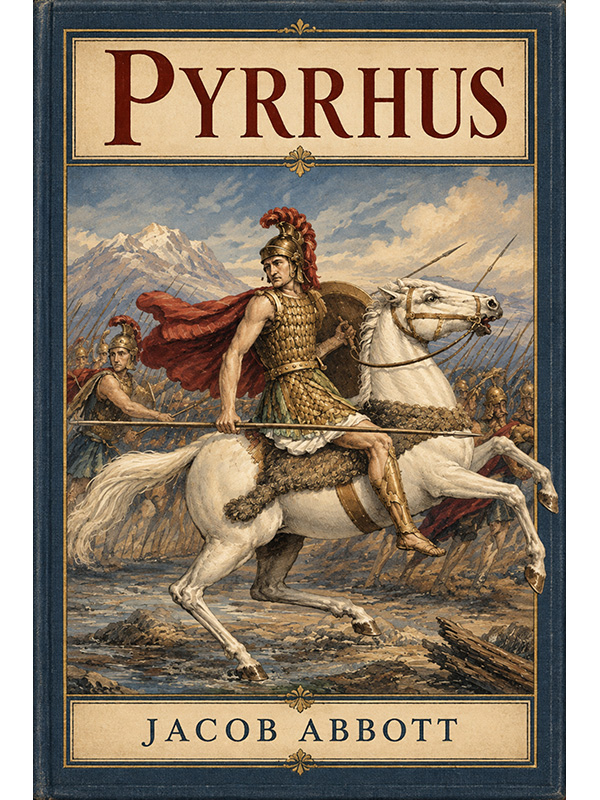
By Jacob Abbott. Pyrrhus of Epirus was one of the most celebrated military commanders of the ancient world. A daring and ambitious ruler, he challenged the growing power of Rome and won victories so costly that his name became forever associated with triumph achieved at ruinous expense.
In Pyrrhus, Jacob Abbott recounts the life and campaigns of this remarkable king against the turbulent background of the years following Alexander the Great’s death. Beginning with the struggles for power among Alexander’s successors, Abbott traces the events that shaped Pyrrhus’s early life, his rise to the throne of Epirus, and his efforts to extend his influence across the ancient Mediterranean.
From the battlefields of Macedonia and Greece to his celebrated campaigns in Italy and Sicily, Pyrrhus pursued military glory through a succession of wars, alliances, and political intrigues. His victories over the Romans brought him lasting fame, yet his restless ambition repeatedly drew him into new conflicts, culminating in his final campaign and unexpected death.
First published as part of Abbott’s Makers of History series, Pyrrhus combines biography with the political and military history of the ancient world. Drawing upon the accounts handed down by classical historians, Abbott presents the events, personalities, and rivalries of an age in which kingdoms rose and fell through the fortunes of war. This edition features restored illustrations gathered from two early editions of Abbott’s work.
About the Author: Jacob Abbott (1803–1879) was an American educator, pastor, and prolific author best known for his historical biographies and books for children. He wrote more than 200 works, including the popular Makers of History series, which introduced generations of readers to notable figures and events from the past.