Description
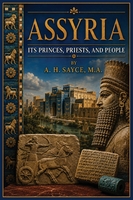
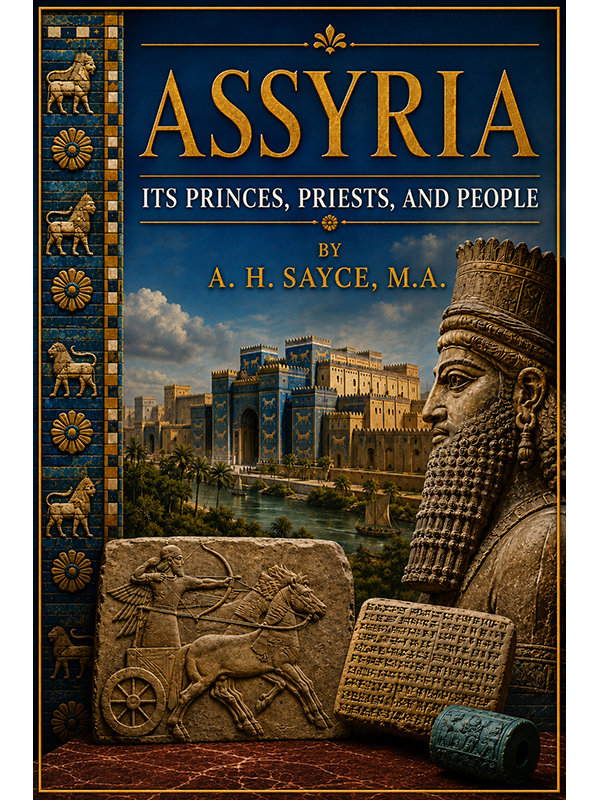
By A. H. Sayce. Journey into the lost world of ancient Mesopotamia and discover the rise and fall of one of history’s most powerful civilizations.
In Assyria: Its Princes, Priests, and People, distinguished archaeologist and scholar A. H. Sayce presents a fascinating exploration of the Assyrian Empire, a civilization that once dominated the ancient Near East with its mighty armies, magnificent cities, and formidable kings. Written during the great age of nineteenth-century archaeological discovery, this classic work opened the wonders of Assyria to readers at a time when excavations at Nineveh and other ancient sites were revealing a forgotten world long buried beneath the sands of Mesopotamia.
Drawing upon inscriptions, monuments, and newly deciphered cuneiform texts, Sayce reconstructs the history, religion, government, and daily life of the Assyrian people. Readers encounter rulers such as Sennacherib and Ashurbanipal, as well as the priests, warriors, scribes, and ordinary citizens who shaped one of antiquity’s greatest empires. The book explores Assyrian warfare, palace life, religious beliefs, art, and relations with neighboring civilizations, including ancient Israel, Babylon, and Egypt.
Written in a clear and engaging style, Assyria: Its Princes, Priests, and People combines scholarship with vivid historical narrative, making the ancient world accessible to general readers while capturing the excitement of the great nineteenth-century archaeological discoveries. More than a history book, it is a window into a civilization whose achievements and influence shaped the development of the ancient Near East.
This carefully restored reprint revives a landmark work on ancient Assyria and the civilizations of Mesopotamia for modern audiences. Ideal for students, history enthusiasts, and anyone fascinated by the civilizations of ancient Mesopotamia, it remains a compelling introduction to the grandeur and mystery of ancient Assyria.
About the author: A. H. Sayce (1845–1933) was a British Assyriologist, linguist, and professor of Assyriology at the University of Oxford, renowned for his pioneering work interpreting and deciphering ancient Near Eastern languages and inscriptions. He wrote extensively on Assyria, Babylon, Egypt, and biblical archaeology, helping introduce the discoveries of Mesopotamian archaeology to a wide nineteenth-century readership.