Description
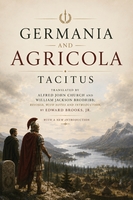
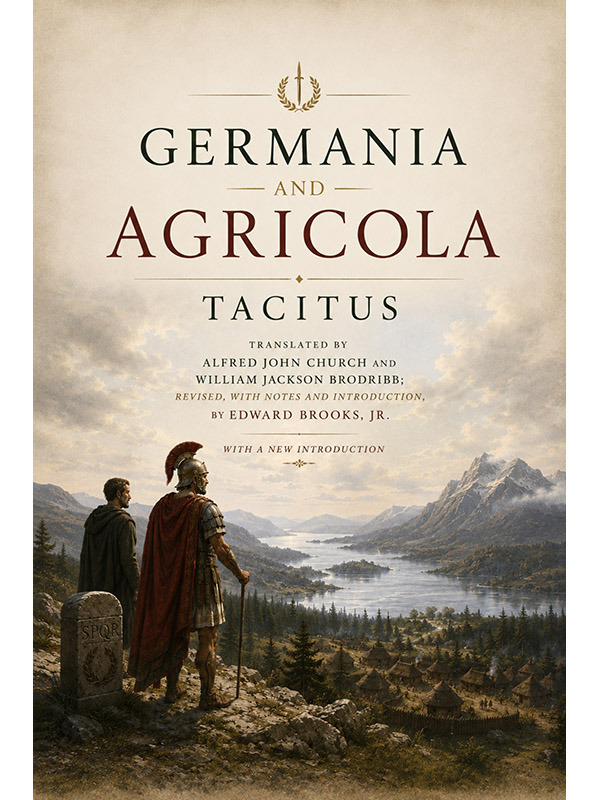
By Tacitus. Translators: Alfred John Church and William Jackson Brodribb; Annotator: Edward Brooks, Jr. For nearly two thousand years, Germania and Agricola have stood among the most important surviving works of classical history. Written by the Roman historian Tacitus, these remarkable texts offer a window into the world beyond Rome’s frontiers and into the character of one of the Empire’s most distinguished generals.
In Germania, Tacitus provides a detailed account of the Germanic tribes of northern Europe, describing their customs, social organization, warfare, religion, and values. Although written from a Roman perspective, the work remains one of the principal sources for understanding the early Germanic peoples and their relationship with the Roman world. Its influence has extended far beyond antiquity, shaping historical scholarship and inspiring generations of readers interested in the origins of Europe.
Agricola is both a biography and a historical narrative, recounting the life and achievements of Gnaeus Julius Agricola, Tacitus’s father-in-law and the Roman governor who extended Roman rule deep into Britain. Alongside its portrait of an honorable statesman and commander, the work offers a fascinating account of Roman Britain, including military campaigns, native resistance, and the famous confrontation with the Caledonian leader Calgacus.
This edition includes:
- A new introduction placing Tacitus’s Germania and Agricola in their historical context and examining how modern research has confirmed, challenged, and expanded upon their contents.
- Biographical sketches of Tacitus, translators Alfred John Church and William Jackson Brodribb, and annotator Edward Brooks, Jr.
About the contributors:
Tacitus (c. 56–c. 120) was a Roman senator and historian whose Germania, Agricola, Histories, and Annals are among the most important surviving sources for the early Roman Empire. Widely regarded as one of antiquity’s greatest historians, his writings continue to shape modern understanding of Rome and its neighbors.
Alfred John Church (1829–1912) was an English classical scholar, schoolmaster, and prolific author whose translations and retellings of Greek and Roman literature introduced generations of readers to the ancient world. He is best known for his accessible English versions of classical texts, including the works of Tacitus.
William Jackson Brodribb (1829–1909) was an English clergyman, classical scholar, and translator whose elegant and accurate renderings of Roman literature remain highly regarded. His collaboration with Alfred John Church produced some of the most widely read English translations of Tacitus.
Edward Brooks, Jr. (1831–1912) was an American educator, author, and former Pennsylvania Superintendent of Public Instruction who devoted his career to education and classical scholarship. For this edition, he revised the Oxford translation and supplied notes and an introduction for students and general readers.