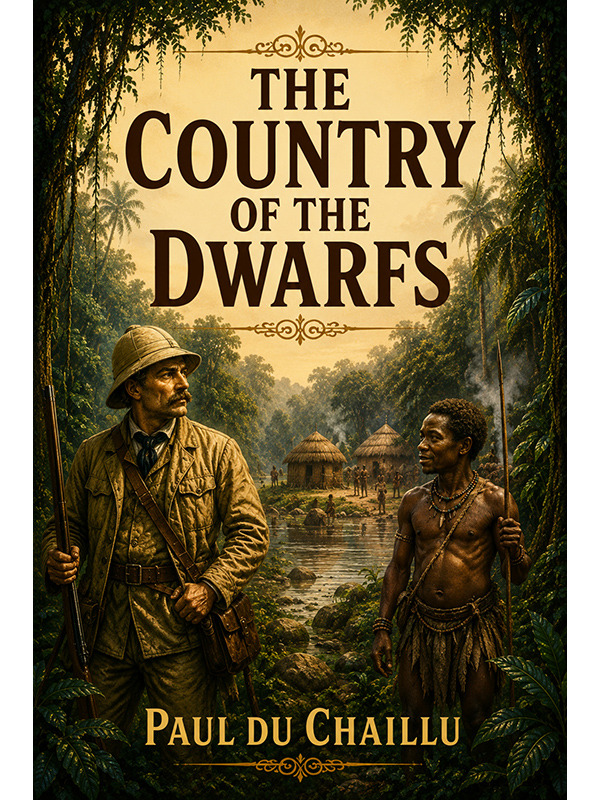
Description
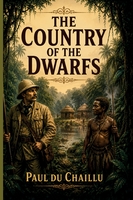
By Paul du Chaillu. Venture deep into the mysterious forests of equatorial Africa in this extraordinary nineteenth-century travel narrative by one of the era’s most famous explorers.
In The Country of the Dwarfs, renowned explorer Paul du Chaillu recounts his dramatic journeys through the remote and little-known regions of Central Africa, where he encountered the forest peoples then commonly referred to in European literature as “dwarfs,” along with a remarkable array of landscapes, wildlife, and indigenous cultures. Filled with adventure, danger, discovery, and vivid firsthand observation, this classic work captures the excitement of exploration during the great age of African travel.
Traveling through dense jungles, river systems, and isolated villages, du Chaillu describes encounters with forest communities, local customs, hunting expeditions, tropical wildlife, and the immense challenges faced by explorers in the interior of Africa. His narrative presents readers with a world that was, at the time, largely unknown to European audiences, offering glimpses into both the natural environment and the cultural diversity of the region.
Best known as one of the first explorers to describe gorillas in detail to the Western world, du Chaillu combines scientific curiosity with dramatic storytelling, creating a narrative that is both informative and intensely adventurous. The book reflects the spirit of nineteenth-century exploration while also preserving valuable historical observations about Central Africa during a period of rapid global change.
Written in an engaging and highly readable style, The Country of the Dwarfs remains an important work in the history of African exploration literature. Its pages are filled with scenes of tropical wilderness, perilous journeys, and encounters that fascinated readers around the world.
This carefully restored reprint revives a classic of travel and exploration writing for modern audiences. Ideal for readers interested in African history, exploration, anthropology, and nineteenth-century adventure literature, it remains a compelling journey into one of the most remote regions explored during the Victorian age.
* This new edition includes a new introduction, an author biography, and digitally restored illustrations reproduced from the earliest available editions.
About the author: Paul Du Chaillu (1831?-1903) was a French-American explorer, zoologist, anthropologist, and travel writer best known for his pioneering expeditions into Equatorial Africa during the mid-nineteenth century. He became internationally famous after publishing vivid accounts of his travels among the forests and peoples of West and Central Africa, particularly for helping to confirm the existence of the gorilla to European and American audiences. Between 1855 and 1859, he traveled extensively through parts of present-day Gabon and neighboring territories, collecting animal specimens and documenting local societies. During these journeys he encountered gorillas, at that time still regarded by many in Europe as semi-legendary creatures known mainly from fragmentary reports and skeletal remains. His successful transport of gorilla specimens back to Europe and America brought him immediate fame. Du Chaillu spent much of his later life traveling between Europe, Russia, and the United States. He died in St. Petersburg, Russia, on April 29, 1903, reportedly following a stroke while engaged in research. He was buried at Woodlawn Cemetery in New York City. Though controversial during his lifetime, Paul Du Chaillu is today recognized as one of the important explorer-naturalists of the nineteenth century, whose writings helped shape Western understanding of Equatorial Africa and its wildlife.